Technology decisions accumulate. Architecture, stack, and platform choices shape organizations for years. Without a strategy, teams may duplicate microservices or stick to legacy platforms, wasting resources and raising maintenance costs. Yet most leaders use ad hoc planning without a formal strategy.
The Cost of Flying Blind
Without a clear technology strategy, organizations face a predictable set of problems:
- Duplicated effort across teams building similar capabilities in isolation
- Technology sprawl that increases operational complexity and security surface area
- Misalignment between technology investments and business objectives
- Difficulty communicating technical direction to non-technical stakeholders
- Reactive decision-making that prioritizes urgency over importance
These aren't theoretical — they're daily realities for fast-growing engineering organizations unable to coordinate.
Strategy Is Not a Document
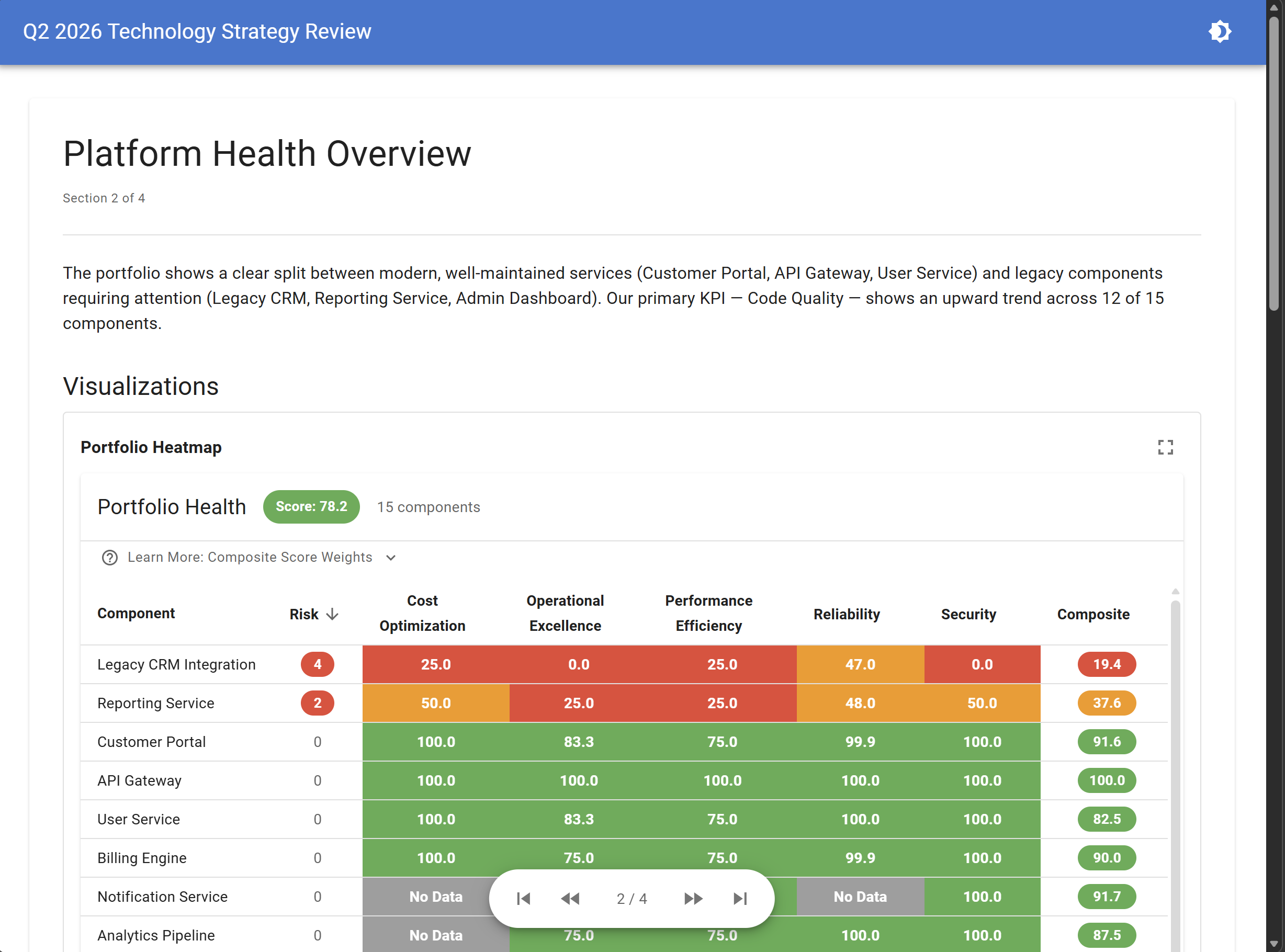
Some see strategy as a static document. Actually, it's ongoing: understand your landscape, make choices, and share them. Review monthly, update decisions, and keep a log of your tech landscape to align teams.
Strategy is about making choices, trade-offs; it's about deliberately choosing to be different. — Michael Porter
For technology leaders, this means having clear answers to fundamental questions:
- What technologies are we investing in, and why?
- What are we deliberately choosing not to adopt?
- How do our technology choices support our business goals?
- What risks are we carrying, and are we comfortable with them?
- How do we communicate our technical direction to the rest of the business?
Making Strategy Operational
Most organizations struggle to execute strategy. It must be embedded in team workflow, visible in tools, reflected in decisions, and measured by metrics.
That's why we built Nervespan — to make strategy actionable. Adopting new tools can cause resistance. Nervespan integrates with existing workflows, connecting tech decisions and metrics for daily strategy practice without overwhelming users.
Start With What You Have
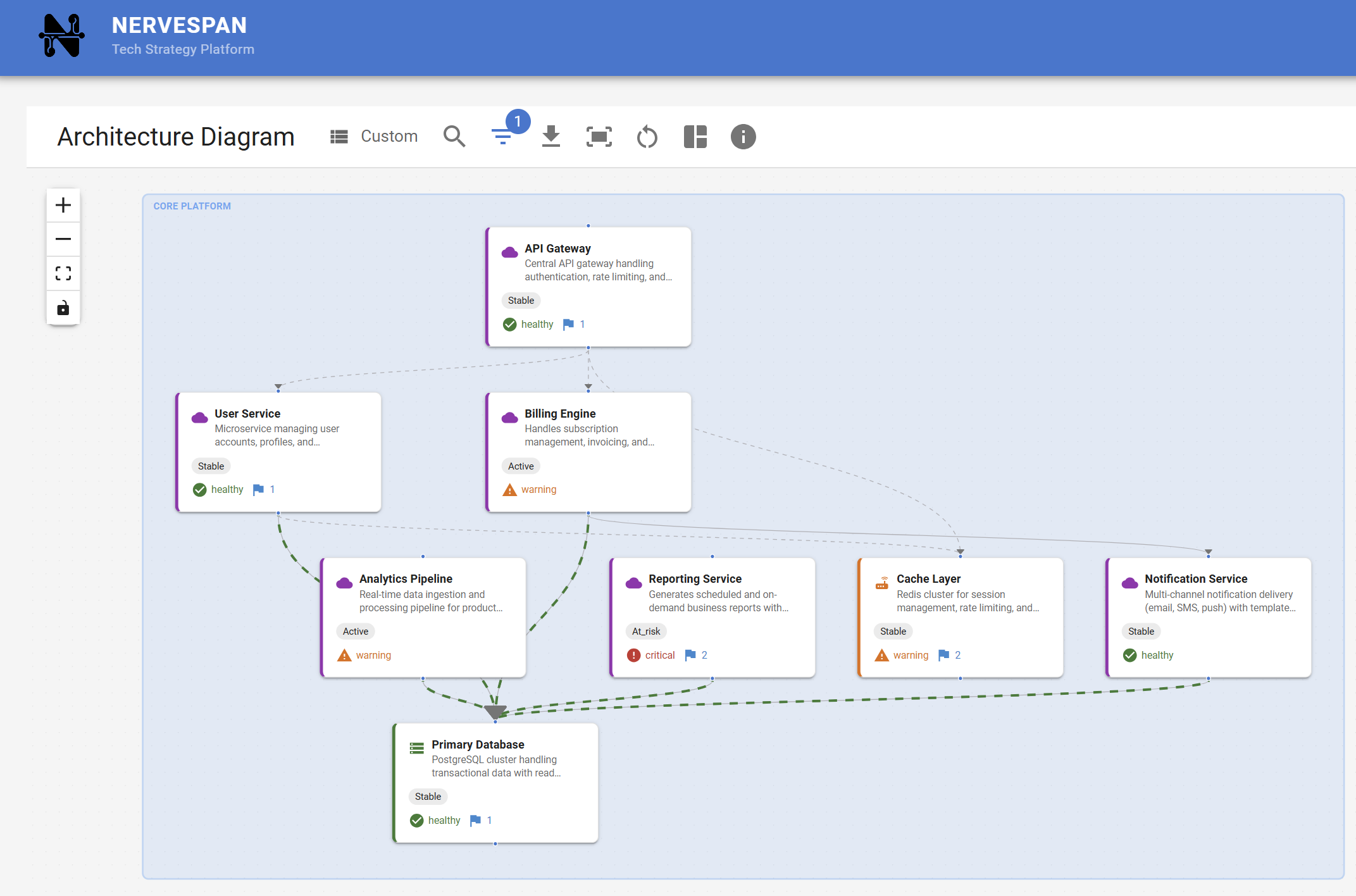
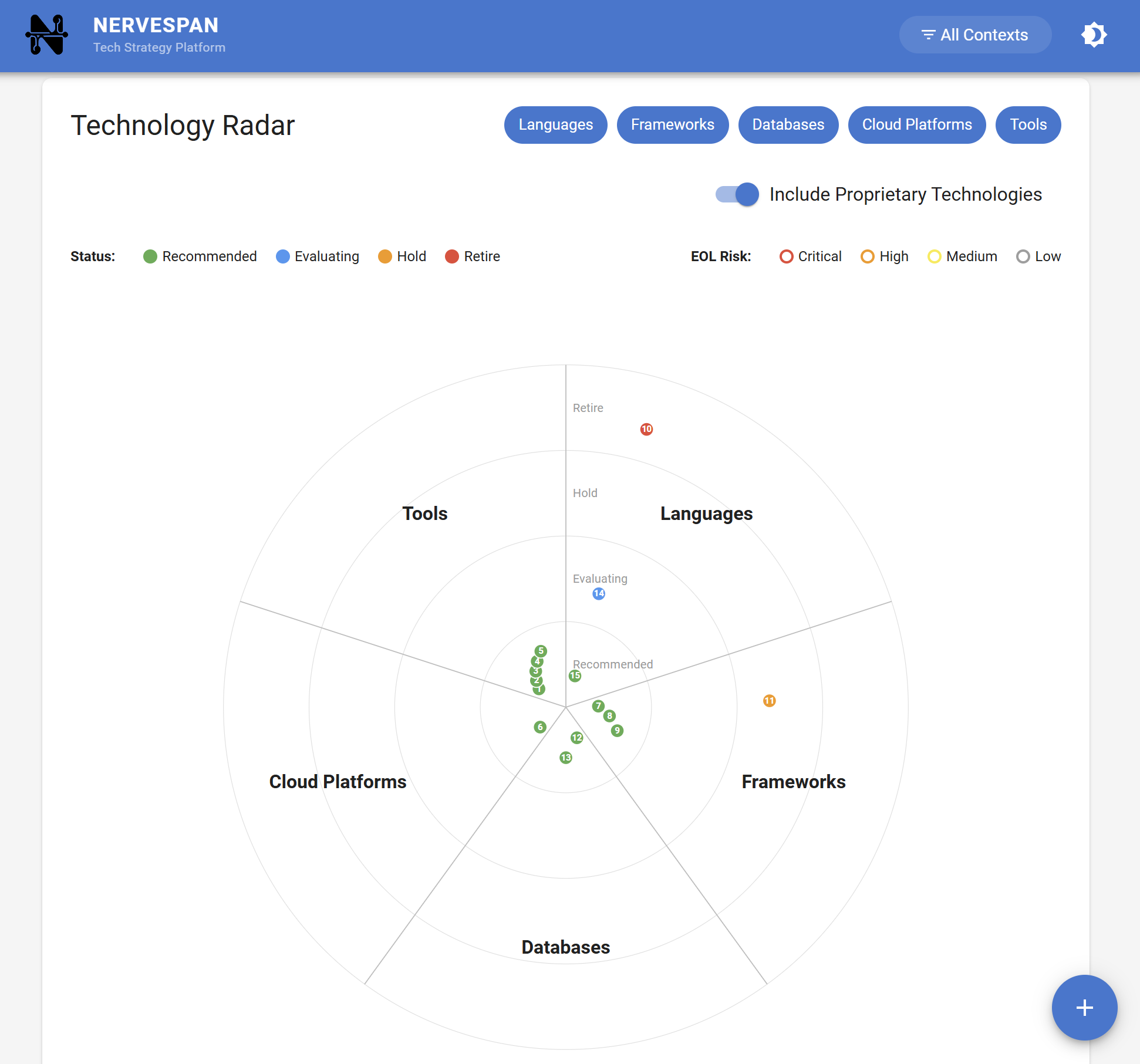
You do not need a complete plan to begin. Map existing components, technologies, and key decisions. Making your landscape visible often uncovers valuable insights.
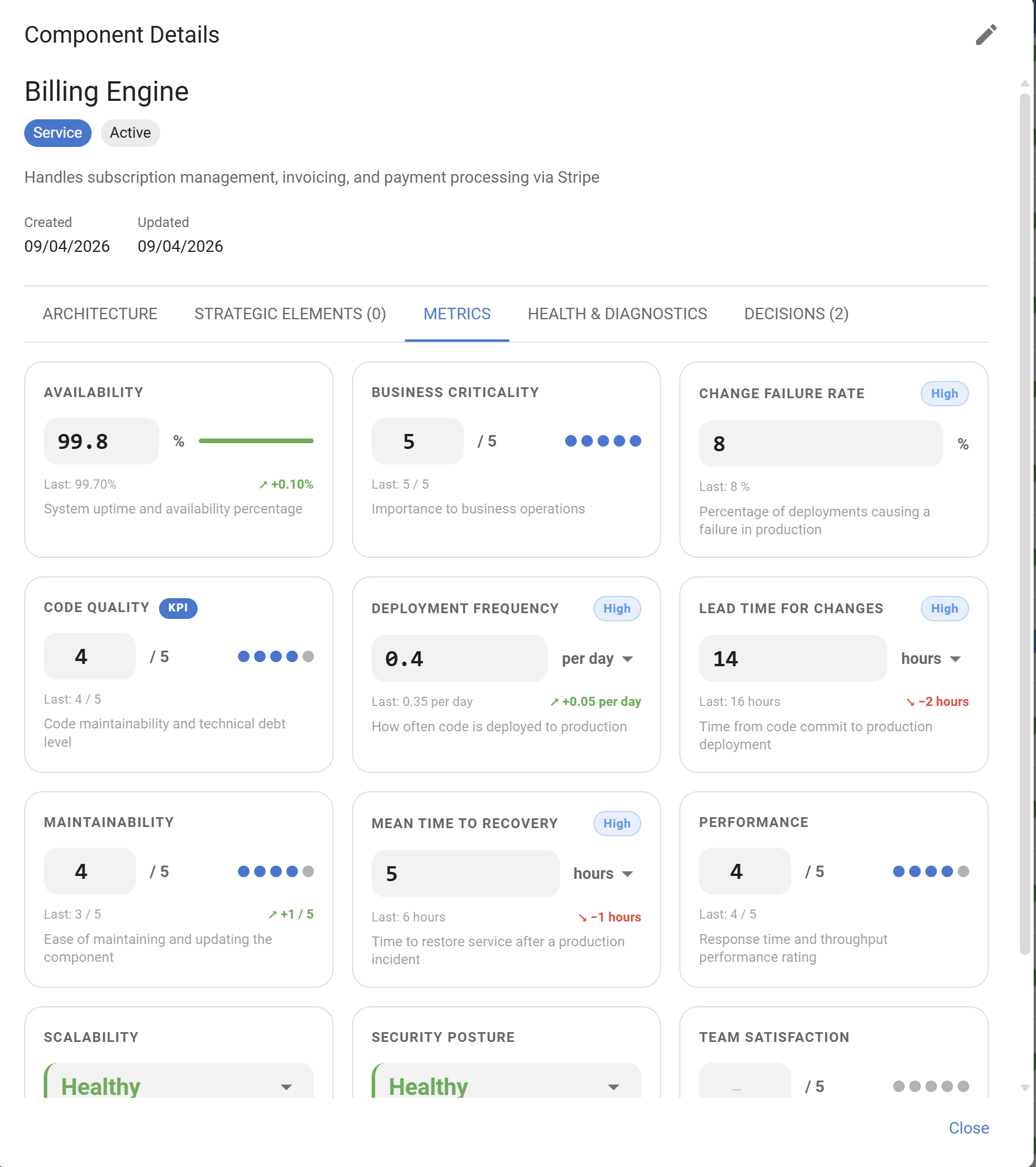
Then, add strategy: track risks, plan actions, and measure progress. Metrics such as deployment frequency, MTTR, incident rate, and test coverage indicate improvement. Visibility helps leaders and teams make better decisions. Strategy grows step by step.
The Bottom Line
Technology strategy isn't predicting the future. It means making smarter decisions now: informed, deliberate, and aligned. In a fast-changing landscape, that clarity is invaluable.
Begin now — map your technology landscape. List key systems, platforms, and decisions. Make your findings visible to drive stronger choices and alignment.
Ready to make your technology strategy operational?
nervespan helps CTOs and architects plan, manage, and communicate technology strategy with confidence.
Start Free Trial