Many CEOs and CFOs assume their engineering budgets go directly to features and growth. In practice, a substantial share is consumed by the Architecture Tax. For example, teams often find that nearly 30% of their time and budget is spent resolving integration issues, refactoring outdated code, and managing legacy systems. This hidden cost is the Architecture Tax in action.
This often-unnoticed tax not only escapes your P&L; it is frequently the most costly part of your technology stack, limiting your ability to deliver business value. To address this, leaders must first identify the hidden costs to regain control over technology investments and set up for strategic decision-making.
The Non-Obvious Insight: Complexity is a Compound Interest Debt
Industry benchmarks show that teams often spend about 30% of their time managing the challenges of complex environments.
A common misconception is treating technical debt as a bill to be paid later. In reality, it acts as Complexity Drag. In a healthy architecture, effort leads directly to feature value. In a taxed architecture, the same effort is lost to fragmented data, legacy dependencies, and unstable components.
Understanding this point, teams pay an architecture tax on every project when complexity becomes unmanageable. Recognizing and managing this dynamic is crucial for leaders who want to restore agility and set effective limits.
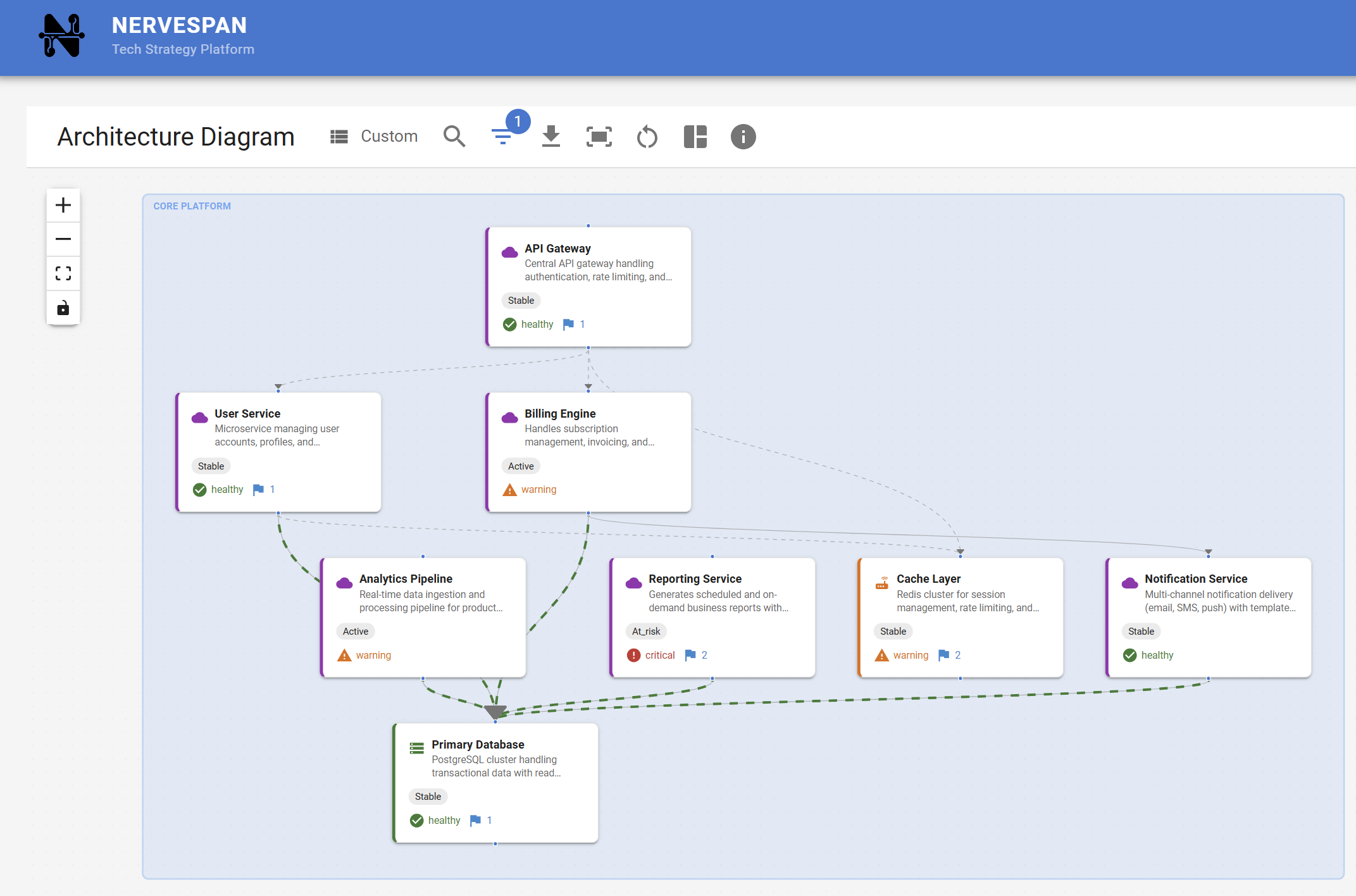
The "Architecture Threshold": Know Your Limit
Effective leaders do not aim to eliminate technical debt entirely; instead, they manage it as they would a line of credit. The key is to set a threshold.
Define what is "good enough" by using Nervespan's industry-standard tier thresholds (Elite, High, Medium, Low) to determine which components must remain tax-free and which can tolerate some complexity.
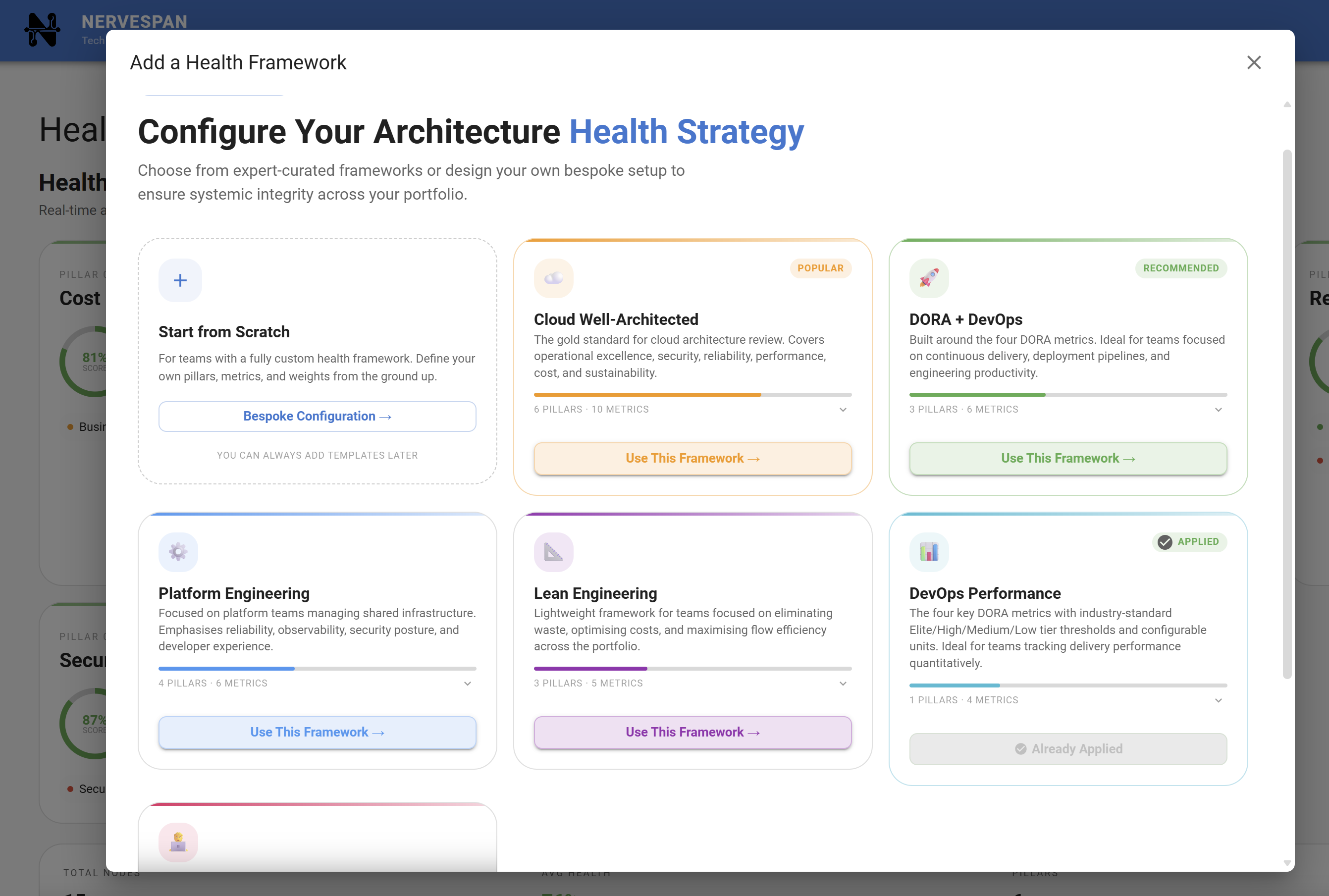
If a component's architecture tax — or complexity — falls into a lower health tier, this should prompt an immediate strategic shift: pause feature development and focus on reducing the tax until the component returns to an acceptable health level.
Allocate a specific portion of your capacity to reducing the architecture tax. This is not routine maintenance; it is a reinvestment in development velocity.
The "Report" Trap
Leaders sometimes respond by requesting additional manual reports from architects, which only increases the architecture tax. This diverts valuable talent to creating static slide decks that are outdated by the time they are reviewed, rather than addressing core issues.
Instead, forward-thinking leaders invest in real-time visibility tools and automated health dashboards. These solutions provide current data and enable architects to focus on resolving problems rather than documenting them.
Closing the Gap with Nervespan
You cannot address a tax you cannot see. Nervespan bridges this gap by transforming architecture from a hidden cost into a visible and manageable asset.
From "Trust Me" to "See Me": Nervespan replaces the manual quarterly deck with a real-time Health Matrix. You see exactly which components are carrying the highest tax and how that correlates with delivery speed.
The Composite Health Score: By rolling up DORA metrics, code quality, and the technology lifecycle into a single score, Nervespan surfaces the "Complexity Drag" before it stalls your roadmap.
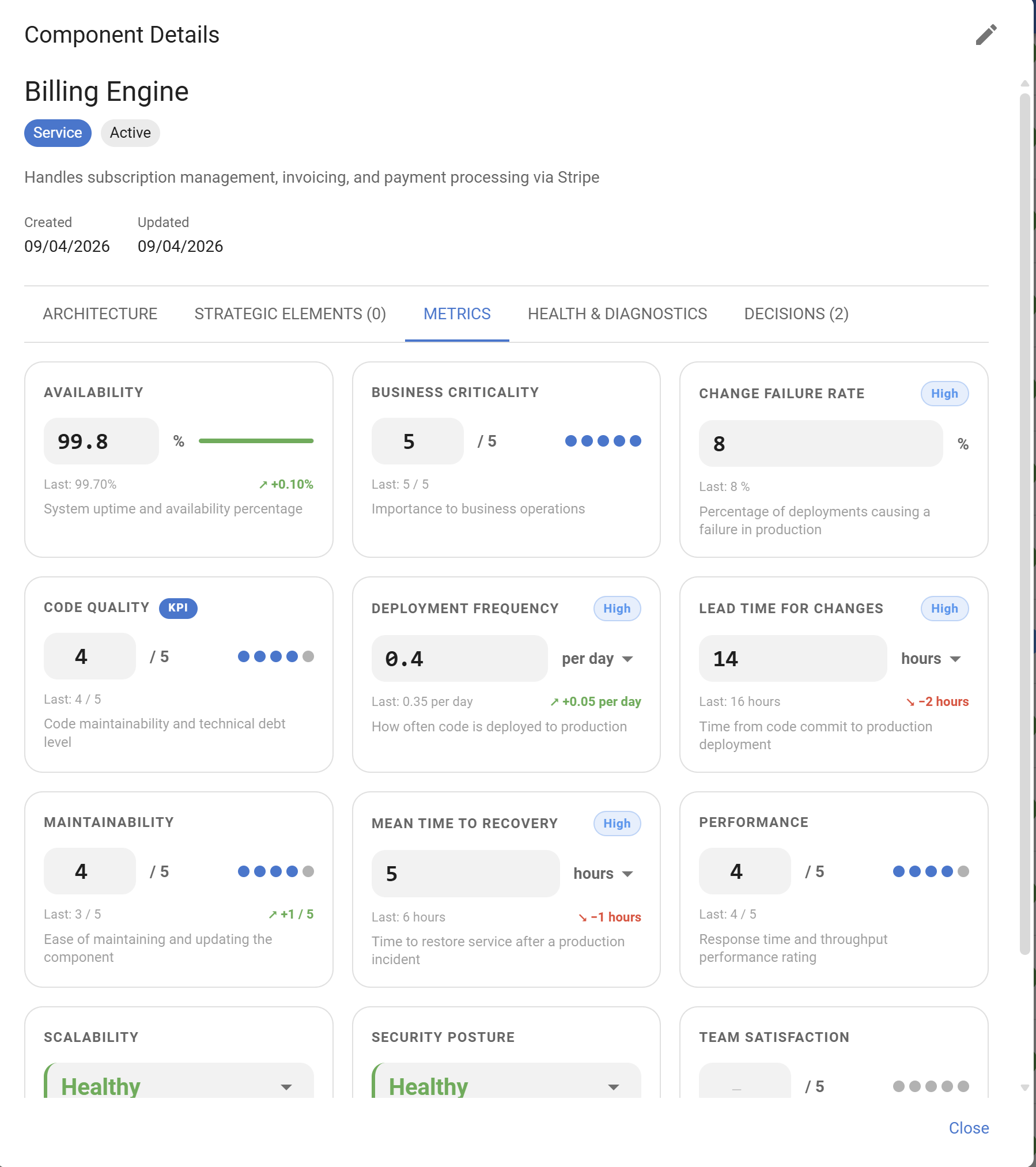
Freeing the Architect: Instead of "reporting" the status, your architects use Nervespan to govern it. The tool automates the audit, allowing your lead talent to focus on reducing the tax rather than just documenting it.
Increase feature velocity and reduce your Architecture Tax with Nervespan. Streamline complexity to address the root cause — not by expanding headcount, but by transforming invisible costs into growth levers. Request a demo or custom assessment and make your architecture tax a manageable asset.
Ready to make your technology strategy operational?
nervespan helps CTOs and architects plan, manage, and communicate technology strategy with confidence.
Start Free Trial